Tag Archives: England

James C Pryor Estate of Huntsville, AL

I was reading through the 1870 estate record for James C. Pryor from Huntsville, Madison County, AL. The records consist of about 200 pieces of paper that range from guardian receipts, debts, statements. Sometimes it’s fun just to read through everything, especially when it covers a broad range.

1.  Ephemera. It’s a fancy name for pretty papers. The receipt from the Venable’s Hotel (1859) shows an old-timey train and a quaint steamboat that may have been typical of the ones that traveled up and down the Tennessee River near Huntsville.

james-c-pryor-estate-3

2.  Documentation of Dates and Occupation. James C. Pryor born about 1805 in England was recorded as a manufacturer of shining machines on the 1850 Census. A receipt for Wm. B. Figures shows he had purchased a lot of tools from Pryors estate in June 1859. Another receipt stated on 29 Apr 1859 a rosewood burial case was purchased, indicating Pryor had died before the tool sale.

james-c-pryor-estate-2

3. Newspaper Clippings. I love it when old clippings are included in estate files. These 140 year-old clippings state the estate hearing date on 25 Feb. 1870.james-c-pryor-estate-1

4. Slaves. African American names sometimes get lost in history, or at least buried in old papers.

james-c-pryor-estate-slaves

On or before the twenty fifth day of December next we or either of us promise to pay to A. Eason trustee for Joseph Thomas sixty dollars for hire of negro woman Laura and child. Said negro to be return on the day above written. As witness our (word obscured by tear): January 9, 1860. Martha Pryor, J A Hobbs. Jarvis Johnston.

5. Unmentionables. I can just imagine… Imagine the chagrin of James C. Pryor’s daughter Margaretta F. Pryor, later Kenard, who in 1861 at age 15 purchased a corset. She probably never thought her under garment would be exposed for the world to see on the Internet in 2015.james-c-pryor-estate-41 corset $2.00
Rec’d of James Johnston adminr. of James C. Pryor, dec’d Two dollars in full for above a/c of Margaretta J. Pryor inft. of the said Pryor dec’d. April 18th 1861.
A. Buchman

The estate file includes a statement that James C. Pryor was the husband of Martha, father of Thomas H. Pryor and Margaretta.
Category: Alabama Pryors | Tags: , ,

Richard Prior, a Surgeon in London, England

Posted on by


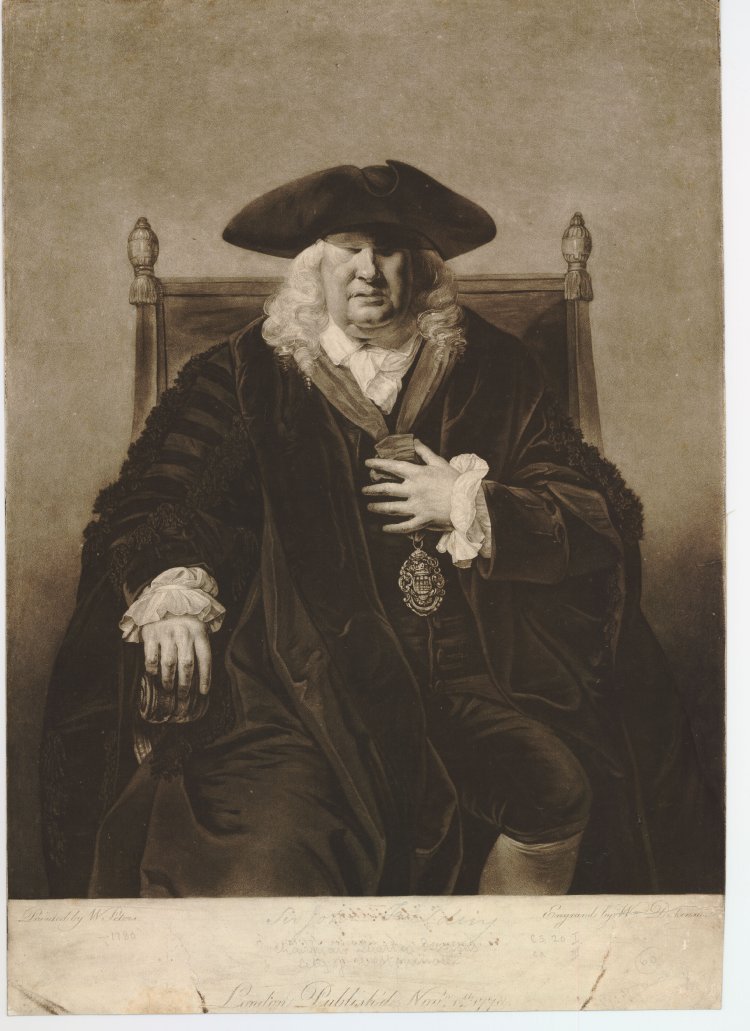
I love an interesting story– even if it’s a Pryor in another country. An old English newspaper report that mentioned a Richard Prior who was a surgeon caught my interest. The report places Richard in Tooting which is now well into the region considered London, however a couple hundred years or more ago it was probably outside of the hustle and bustle of the city.  I was also intrigued by the magistrate who was looking for the bad guys involved in the reported assault. Yes, Sir John Fielding was pretty interesting guy in his own right as well as the brother of the author Henry Fielding (best known for the bawdy novel Tom Jones).

It sounds like a tale of an attack by 18th century highwaymen…

On Tuesday Night last, about Eleven o’Clock, a Man — a little black Horse, and dressed in a Horseman’s Great Coat, came to the House of Mr. RICHARD PRIOR, surgeon and Man Midwife, at Tooting in Surrey, and asked if Mr. Prior was at Home and delivered the following Message, via. that Mrs. Bromley, living near Mrs. Evley’s was ill, and desired his immediate Assistance and then rode away in great Haste, on which Mr. Honathn Craton, Journeyman to the said Mr. Prior, his Master, noticing at home, set out immediate to — the said Mrs. Bromley’ but Mr. Crayton had not gone far before he overtook two Men on foot and saw the Man on Horseback, a little before them, but he had no sooner passed one of the aforesaid Persons on foot, than he received a Stab in the Side, and endeavouring to make a Defence, he received another, which, if it had taken Place must have destroyed him, as appears from the Cut through his Clothes and Shirt, he also received a violent Blow from the other Man on foot, which brought him to the Ground. At this Instant a Carriage advancing with a Flambeaux the Villains departed, and Mr. Crayton, with some Difficulty, reached Home, and has been dangerously ill of his Wounds ever since. As there is no such Person as Mrs. Bromley living at the Place above mentioned, and as no Money was demanded of this young Gentleman and Mr. Prior was particularly asked for at his house, it is imagined that this was Plan laid by some evil-minded Person to destroy the said Mr. Prior; if therefore any one can give such information to Sir John Fielding as may be the Means of discovering these shocking Offenders, shall receive Fifty Pound Reward on the Commitment of either of them and if any one of them will surrender himself to the Magistrate and discover his Employers or Accomplices —be admitted as Evidence for the Crown and on either of the Convictions be entitled to the same Reward, to be paid by Mr. Alderman Plumb, by the Directions of the Inhabitants in that Neighbourhood, who think themselves highly interest in the Safety of the said Mr. Prior. as well on account of his Character as a Gentleman, as of his Abilities in his Profession and being at the same Time desirous of bringing Offenders to Justice, who are capable of such horrid Attempts.
J. Fielding

The Person who stabbed Mr. Crayton was with a thin pale Vissage, his own, Hair in one —, blue jacket like a Posillion’s, Buck-skin Breeches, half boots. The other was a short Man. If… Persons have been seen loitering at the Alehouses … Neighbourhood, the are desired to give Notice —-
The Public Advertiser, London, 31 Mar 1767


Category: England | Tags:

Slaves Among the Priors and Pryors in Edgefield County, SC

slavery1The book Edgefield, South Carolina, Slave Records, 1774-1866 by Gloria Ramsey Lucas on Ancestry.com has proved to be a good source for Pryor names. The author delved into property records (slaves were property) to find her African American ancestors. In the forward the author states,  “After examining these inventory and sales documents, I realized that the information contained within them could help thousands of other African Americans who were researching their family roots, but were unable to get beyond the 1870 United States census.” Yes, and it adds useful information for tracing the white Pryor slave holders families.

Daniel Shaw 1/25/1796 to John PRIER
Box 45, pkg 1921
Binah (negro, old wench) and Phillis, Shade and Prince

Jno. PRYOR 7/11/1797 to Hannah Puckett
Box 22, pkg. 802
Mary and Lewis (negro woman and child)

John PRIOR 12/7/1816 “Sale Forbid”
SS Book 1844-1852, page 28
Alfred

John PRIOR 5/18/1818 to Jno. Grubs PRYOR, Wm P. Tobias Pryor, Tobias Pryor Grubs
Equity File #41
Dick, Ellick, Jack

Richard Coker et al 2/6/1843 to Sarah M PRYOR
SS Book 1840-1853, page 75
Patty

Daniel Prince 12/12/1843 to Jno. Grubs Pryor, Tobias P and Wm P.
Box #90, pkg. 3633
Allen, son of Dealy
at the same time Daniel Prince sold Robert Prince a woman named Dealy.

Martha PRIOR 12/1/1845 “Sale Forbid”
SS Book 1844-1852, page 28
Fortune, Gadock, Granderson, Hannah, Jane, Judy, Rachael, Susan, Dianna, Ned

Tobias PRIOR to Richard Pryor 8/16/1848
Deed book EEE, page 450
3 young boys, George, Henry, and Jacob who was just 7 months.

What happened to the Pryors and their slaves? I looked at the 1860 Census and found that there were 3 slaves owned by a Pryor/Prior were in Edgefield County, SC — the slave holder was Mary Prior. This is likely Mary who was the widow of Tobias Pryor. They were counted together on the 1850 Census and she appears as a head of household in 1860. The names of the slaves don’t indicate they were being traded or deeded between the Pryor family members. Since there’s no sale information recorded in Gloria Ramsey Lucas’ book, I have to wonder what happened to African-Americans who were held by the Pryors before the Civil War. What happened to these people?

Matthew Pryor – Letters to England

Elizabeth Pryor Harper included in her book Twenty-one southern families: Notes and Genealogies the following record that includes a Matthew Pryor as a signer of a British document:

To ye Sheriffs of Middlesex Cy his Deputy– In 1672 and 1673 Gov. Andrus ordered services for the purpose named his proclamation…In 1702 British victories were cause for Thanksgiving…Whitehall Nov. ye 11th 1702. We send you enclosed Her Magisty’s proclamation directing a publick thanksgiving throughout England for the great successes of her Ma’tys arms by sea and land and we do hereby signify–likewise solemnize throughout Virginia and throughout all her plantations in America…Yo’r very loving friends–Robert Cecil, Ph. Meadows, Wm. Blathwayt, John Pollexfen, Mat. Prior.

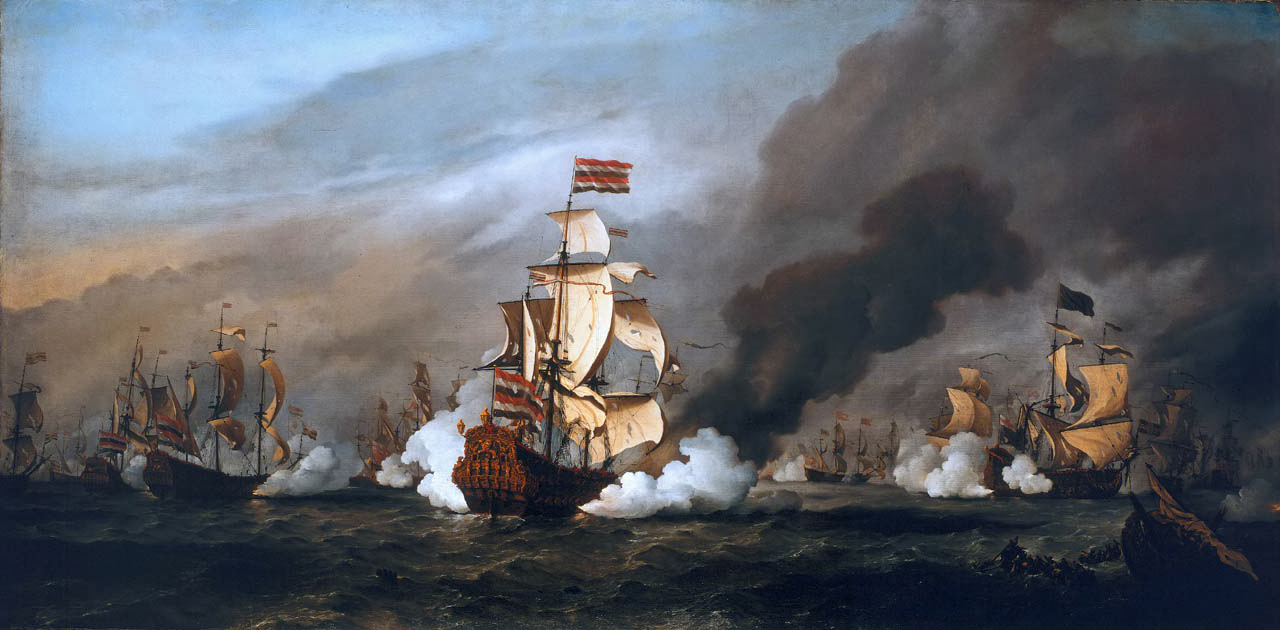
Hmmm. It sounds like a royal proclamation ordering a holiday to celebrate a British victory. At the time (1672) England was involved in the Anglo-Dutch War (see Wikipedia).

The order to celebrate went out to the colony of Virginia. However, I’m finding no evidence that the men who signed the order lived in Virginia. They were members of the British parliament and lived in England.

John Pollexfen (1636-1715). He was a Member of Parliament involved in the passage of the Tobaccco Act and also a merchant connected with the East India Trade Company.

William Blathwayt (1649-1717). He was a big player in the British government’s organization of trade with the American colonies.

Matthew Prior, from several online sources, was a boy born to simple means (his father was a joiner or carpenter) who on his scholastic merit had an “ivy-league” education. He became a poet and a member of Parliament.

Maybe when the Pryors can get back further in their family trees they’ll re-discover this Pryor on the other side of the the pond.

Category: In Context of History | Tags:

Lost Ancestors II – Solving Genealogy Mysteries by Finding Americans in Unexpected Places

Posted on by

When we think of American migration in the mid-1800’s, the imagination often wanders to images of wagon trains and pioneer families trudging westward across the plains.  “Westward, Ho” was a reality, a great migration spurred by the opening of new territories and the California Gold Rush. Our “one-way” vision of migration toward only the west has been perpetuated by Hollywood movies.  The reality was not so tidy.

Our ancestors actually the ability to travel in all directions! The first steamboat on the Mississippi, the major North-South waterway, was launched in 1811. The first transcontinental -railroad was completed in 1869 and connected the east to the west.  From the 16th century onward ships crossed the Atlantic bringing new immigrants to the US and American visitors to the Old World.  Sure people migrated to isolated homesteads on the Great Plains, however others flocked to the small towns that grew on rivers and rail lines. With various modes of transport in place, our ancestors were more mobile than their film stereotypes.

For almost ten years I’ve been engaged in a surname research project (Tennessee Pryors). I continue to be amazed at how far people traveled and where they went causing them to disappear from the census and other public records for years at a time.  When you can’t find an ancestor in an expected location, then, try searching records for the unexpected places I’ve discovered.

Eastward, Ho! For some pioneers life in the frontier was just too unforgiving. When crops failed and homesickness set in, some of our ancestors went back to their eastern homes. Some cautious folks when faced with the uncertainty of what was in store for them in the Wild West, never sold their eastern land. So, just because an ancestor was found in the west and then disappears from records, don’t discount their possible return to their original community or nearby areas.  Pay attention to birthplaces on the census: while investigating a family in Virginia I found one of their children was born in Missouri. That opened the door to finding them on Missouri census records.

Washington, DC. When you know a family was educated and held social prominence you may find them in Washington, DC or surrounding areas. Like today, successful families gave back to their community by running for political office.  If in doubt, Wikipedia has numerous lists of political offices and who has held them.

France, Mexico, and Indian Territory: Before Louis and Clark, St. Louis was a pioneer town in the part of France (and for a time Spain) that would become the State of Missouri. More than 20 years before the Mexican War and the annexation of Texas, Stephen Austin took a group of American pioneers into an area of Mexico that wouldn’t become Texas until after the fall of the Alamo. Other pioneers headed into Indian Territory to establish homesteads or trading posts.  Sites like the Missouri Secretary of State Digital Heritage have some territorial records.  Often records are in the form of letters to territorial governors or land grants that have yet to be translated from Spanish or French, nor have they been transcribed into digital documents, so a meticulous search is needed to find reference to these pioneer families.

Travel Abroad: One family I research appeared to be lost from the census records. They were in the South up to the 1860 census and then they were gone. It wasn’t until I playfully searched the UK Census that I found them. Business had caused the family to move abroad. The UK Census provided the clue and subsequent searches of ships’ manifests and passenger lists gave the details of their return to the US—landing and setting in the North after the Civil War. The Canadian Border Crossing records on Ancestry are also helpful to the researcher.

Lost ancestors? All are not lost! With some diligent detective work in the unexpected places, you may find ancestors who you thought were missing.