Henry Co., KY Pryors

Mary Ann Dobson is sharing some interesting Shenandoah Co., VA deeds that name Pryors in Henry Co., KY. These Pryors may be related to the Pryors and Duncans who migrated to Missouri- Bates County and Gasconade County.

“Last month, I had a chance to research at the genealogy library in Salt Lake City and look again at the microfilm.  I have a JPG image of page 34 and most of page 35, but did not look at the images until I got home (no portable computer).”

Shenandoah Co. VA Deed (SLC 8/30/2010)
Y-34/35:  15 July 1815, Reuben Duncan and wife Martha (X) to Taverner Young and Thomas Young, all of Henry Co. KY, for $1,000, sell all their right and title to the three? farms in Virginia with all appurtances belonging known by the names of the Manor place, the mountain place & Bottom Place, which said Reuben & Martha hold as heirs at law of John Young deceased.  Wit. Jack Pryor, Willis Duncan.  Reuben Duncan & Martha appeared 23 Sept. 1815 in Henry Co.  Ordered recorded, 12 Oct? 1817.  (FHL film 33,898)  (MAD: son of James & Aseneth Browning; grandson of Wm. Elder)

“I also found the image of the first part of the following deed:”

Y-35:  13 Oct. 1817, Taverner B. Young Senr?/one? of the sons & heirs at law of John Young 3rd decd, who was one of the sons heirs and devisees of Edwin Young the elder decd and Nancy his wife of Bath Co. KY, to Benjamin Ward? (Wood?) of Shenandoah Co. VA; the said Edwin Young the elder decd by his last will and testament in writing dated 9 December 1772 among other things therein gave and devised to his son the said John Young the 3rd a tract of land in the afsd Shenandoah Co. which the said Edwin Young the elder purchased of Enoch Lot? (Job?) at the sum of 400 pounds to be divided among his eight children and 1/4 thereof to be paid annually after the said John Young 3rd should be in possession one? year as by the will … will fully appear.  And whereas the said John Young 3rd departed this life intestate leaving the afsd Taverner B. Young, Thomas J. Young and Johnston Young his children and heirs at law, and the said Johnston Young having deparated this life before he attained the age of 21 years, …. (MAD: do not have the rest of the document on pg.35 or following).

I hope this helps. Let us know if you make some headway into the Pryor lines !

John Benjamin Pryor – American Horse Trained and British Ex-Pat

Recently I found an American Pryor on the 1871 Census in Cambridgeshire, England.  John Benjamin Pryor born in about 1810 in Virginia.  He was living with his wife Frances and six children born in Mississippi, the youngest child born in England.  Also living with the family was Cordelia Bingmom, Frances’ sister.  Mr. Pryor listed his occupation as horse trainer.  My curiosity was peaked and I started searching the US Census records to see if this Pryor could be placed with his American ancestry.  

The oldest of the Pryor children was William who was 22 in 1871.  I searched the 1850 Census records hoping to find a John Pryor, wife Frances and a young son named William.  I found none.  I tried searching for initials and misspellings, abbreviations, and all variations of the Pryor surname.  I finally had a turn of luck when I found a Benjamin Pryor aged 39, born in VA and living in Adams County, MS.  I was surprised to find Benjamin counted alone; no wife or child.  Without a wife and child I wasn’t sure that this was the even the correct John Benjamin Pryor. 

A J. B. Prior was recorded on the 1860 Census living near Natchez in Adams Co., MS.  His age was 48 and his place of birth was recorded as Tennessee.  Again he was counted as a single man.   I searched the Ancestry.com Family trees and found that there was a John Benjamin Pryor born after 1808 listed as a son of Luke Pryor and Ann Batte. I wondered if this was the same person and was optimistic since the youngest son on the 1871 UK Census was named Luke.  Where was John’s wife and children in 1850 and in 1860?   

Believing that the family was probably in England in 1870 I wasn’t surprised to find the family missing from the US census of that year.  I proceeded to search the 1880 US Census and found John B. Pryor, occupation horse trainer, born in VA.  He and his children who were counted on the earlier UK Census were living in Monmouth County, NJ.  The US Census yielded a clue that was absent from the 1850 and the 1871 records. In 1880 John Benjamin Pryor was recorded as “white” and his children were “mulatto.” 

I searched the 1900 US census to find the birth month and year or Luke Pryor, hoping to get a better idea of how long the Pryor family was in England.  In 1900 Luke was still living in Monmouth County and stated his birth as November 1861, shortly after the US Civil War began  

From these records it’s reasonable to surmise that John Benjamin Pryor was a white man and that his wife Frances was an African American.  The 1860 Slave Schedules revealed that J. B. Prior in Adams Co., MS had 27 individuals counted as slaves.  Four of the children were recorded as Mulatto, however their ages do not correctly correspond with the ages of Pryor’s known children, nor do the records correspond with the ages of Frances Pryor or her sister Cordelia Bingmom [sic].  It can not be determined if Pryor’s wife, sister in law and children were counted as slaves in his household in 1860, although it is the most likely explanation for their absence from the census schedule. 

Addendum: John Benjamin Pryor returned to the US in 1872. Pryor, He settled in New Jersey where his sons followed him into the world of horse training. He and his children are recorded on the 1880 U.S. census in Monmouth County, N.J. His wife and sister-in-law were possibly daughters of the Adam Louis Bingaman and an enslaved woman. [See 1869, Casanave vs. Bingaman in Louisana that involved two children named James Adam and Elenora Bingaman father with a woman of color. They were making a claim against Bingaman’s estate.]

Sharing a Pryor Family Heirloom

While packing up some of my mother’s things I found an hold horn. She had a note packed with it that it had been her father’s and that it had belonged to his grandfather. I’m guessing that it was his Grandfather, Allen L. Pryor, who was born in 1816. My grandpa was raised on the Pryor farm near Gallatin, in Sumner County, TN. I’ve done a bit of research, enough to learn that it isn’t a powder horn. My mom’s note said that she remembered her uncle blowing the horn (that would have been Allen Gregory of Nashville) in the 1930’s. From some photos online it looks hunting horns that people blow to call in the hounds on a hunt. Any ideas of what it was used for in Tennessee? Did they have fox hunting in Tennessee? Do you have a Pryor family heirloom you’d like to photograph and share?

Category: Photos, Tennessee Pryors | Tags:

Jessie Walker Pryor, MD – A Woman Doctor

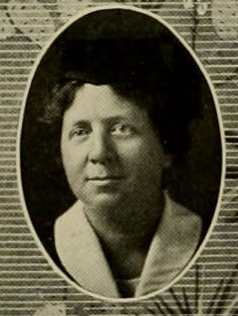
Ancestry has been adding more school yearbooks. I found Jessie Walker Pryor, a young lady who had graduated with an M.D. from the University of Texas in 1920. She is on the 1920 Census in Galvaston, Ward 1… recorded as a roomer and a student at the medical college.  I was able to find her again in 1900 because of another enhancement on Ancestry. The past versions of the 1900 Census were at times illegible. The newer, clearer version on Ancestry shows Miss Pryor in living with her parents in Caldwell County, TX. Her father was born in Tennessee. Can we match this line up to their TN Roots?

Internet Genealogy: How to Confirm a Marriage When You Can’t Find a Marriage Record


US Census records will only take you so far in tying up the 19th Century relationships in your family tree. In 1880, almost a hundred years after the first US Census, relationships were recorded for the first time. Before 1880 it was guess work to figure out who was related to whom in a household. The 1900 Census introduced the question of how long spouses had been married which helped to determine when they were married.

Confirming a marriage can frustrate a dedicated family historian, the search is compounded by the lack of marriage records due to fires that burned court houses and record offices, and marriages that were only recorded in lost church registries, or performed by traveling preachers who didn’t keep records. Rather than relying on guess work or leaving a blank on a family group sheet I can suggest a trio of sources to confirm a marriage when an official record can’t be found.

Court Records: Court records can be a wealth of information. Lawsuits and wills can identify a spouse and may even mention the spouses’ siblings or other kin that can confirm relationships. These records may contain evidence of prior marriages, or clues the approximate date of a current marriage. My personal favorite of all court records are Divorces-they don’t even have to be your own kin’s divorce! I’ve had success finding affidavits in siblings or friends’ divorce records that confirm my own ancestors’ marriage date. Divorces at times occurred in counties different than where the marriage took place, so if marriage records were destroyed a divorce record in another county may still exist.

Civil War Pension Files: If a relative survived his service in the Union Army, the pension file index must be searched. The pension application process, especially when a surviving wife was the applicant, called for confirmation of the veteran’s marriage. The confirmation often took the form of an affidavit form or at times individual affidavits from people who knew the couple. The last pension record I requested contained an affidavit that told the marriage date, where it occurred, who officiated, and a description of an old traditional “shivaree” to welcome the newlyweds.

Google Books: With over ten million books scanned and available online at Google, you’re bound to find an ancestor in one or two of them! A search will turn up numerous genealogy digests and histories. The real treasure is in the biographies that gained in popularity around the mid 1870’s to the beginning of the 20th century. Some of these books were written as the nation became interested its history around the time of the centennial, while others were “vanity” biographies that prominent citizens purchased because their own history was included in the book. The biographies are usually first-hand accounts of the subject’s heritage, thus a reliable source to quote in documenting a family tree.