There’s an article in The Virginia Historical Magazine that includes a very brief synopsis of the 1755 will of John Pryor (husband of Mary New) stating legatees were his daughters Rebecca Woodson and Ann Wright. No mention of his wife nor any other children. If Harris Pryor wasn’t a son of John Pryor and Mary New who was he?
I’ve taken my pencil and I’ve drawn a tenative, yet optomistic line between Harris and my line of Pryors that begins with Nicholas. Now, I just need to figure out how he fits in.Category Archives: Virginia Pryors
Here’s a case for Pryors descended from the Goochland County, VA line of Samuel Pryor and his wife Prudence Thornton!
Samuel Pryor vs William Pryor, et al
Filed in Chancery Court of Louisa County
http://www.lva.virginia.gov/chancery/case_detail.asp?CFN=109-1835-021
A 1799 Summons for not answering a bill of complaint exhibited against him in the county court of Louisa by Samuel Pryor, son of Samuel, John A Pryor, Daniel Farley and Patsey his wife by order of the court.
A copy of the summons was left for Samuel Pryor on the 8th day of May 1799. William Pryor is no inhabitant.
The Commonwealth of Virginia to the sheriff of Louisa County greeting we command you that you attach Samuel Pryor executor of William Pryor dec’d who was administrator of Samuel Pryor deceased if he be found within your balliwick and have save by keep so that you have his body before the justices of our county court of Louisa at the court house. (for Oct 17, 1799)
Col William Pryor who was married to Sarah Wood, was deceased by the time of this suit and he had been the executor of his father Samuel Pryor’s estate. Col. William’s own son named Samuel was his executor and he was also deceased. The suit notes that this younger Samuel Pryor’s children were John A Pryor, Martha Patsy Pryor married to Daniel Farley, and Samuel Pryor.
The youner Samuel Pryor was in Henry Co., KY by 1800. Perhaps he was already in KY by 1799, explaining why he could not be served in Louisa County. John A. Pryor was in KY by 1799 as his son Daniel Farley Pryor was recorded as born in KY in July 1799 in a family Bible.
Daniel Farley must have been a beloved or well-respected family member after marrying Patsey (or Martha) Pryor. His brother-in-law John A Pryor named his youngest son Daniel Farley Pryor.
Hold onto your wigs and your tri-corn hats… it looks like we have another DNA match for the Tennessee Pryors to Colonial Virginia. The frustrating part is that it looks like we’re missing someone from the family tree.
The Match – The new cousin is Mary Pryor who married Robert Quarles. The good news is that we know exactly who this Mary is and who are her siblings. She is the sister of Major John Pryor of Richmond (read post about his time line). The Major’s name may ring a bell for you in connection with the story of his wife, Anne Beverly Whiting, running off with her French tutor and becomming the mother of explorer John C. Fremont.
This means that we need to consider his place as a descendant of Nicholas Pryor b. 1688.
I’m a bit shocked because I was hedging my bet that Major John was connected to the family of Col. Samuel Pryor and Prudence Thornton. Maybe I shouldn’t be too surprised because Major John Pryor had a Jeffersonian connection as well as other connections to other prominent Virginia families. We know that our other Pryors who were in Albemarle and Amherst Counties were also connected to Jeffersons family, one of them even marrying Jefferson’s sister. (read post about Jeffersonian connections).
Father: ___________________? Deceased by 1787
Mother:___________________? Alive in 1787, possibly remarried.
Child 1: Major John Pryor born 1750, married Anne Beverly Whiting and Elizabeth Quarles Graves.
Child 2: Mary Pryor, married Robert Quarles
Child 3: Sally Pryor, married Mr. Taylor, daughters: Elizabeth Taylor, Rebecca Taylor
Child 4: Elizabeth Pryor, married Mr. Hankins, sons: Archer, William, Romert, John, and Pryor Hankins of James City, VA.
And nieces whom I have not yet matched to their parents:
Dorcas Bryan
Charlotte Morrison (of Williamsburg, Va.) born 1790 – Probably Charlotte who married George F. Morrision who was on the 1830 Census in York Co. Charlotte was age 60 on the 1850 Census in York Co. On the same page of the 1850 Census there is a free-African-American family headed by Pryor Jackson and his wife Dorcas Jackson.
Elizabeth Hazelwood
I’ll keep digging. Let me know if you know how Major Pryor fits into the family tree!

From Fort Randolph to Fort Donnally
In my last post I hope I cleared up that the Major John Pryor who received the 4000 acres of bounty land in Kentucky was not killed by Indians.
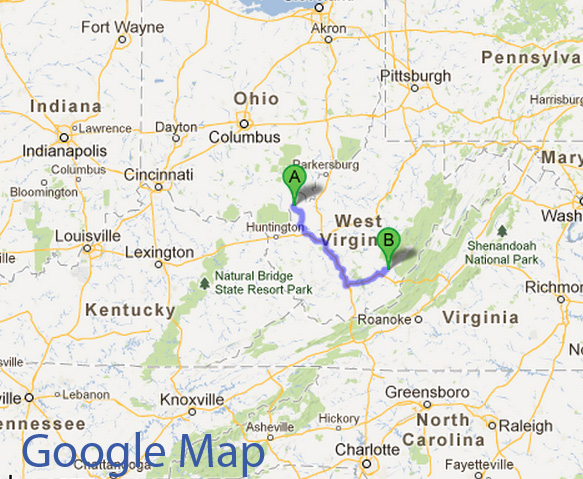
William Pryor of Amherst Co., formerly Albemarle Co., gave an account of his service as part of his 1832 application for a Revolutionary War Pension. He states he moved to the Kanawha area in 1773 but was driven out by Indian attacks. He mentions his brother, John Pryor, who in 1778 was living at Fort Randolph (located at Point Pleasant in Kanawha County) and traveled more than a hundred miles to Fort Donnally to warn of an Indian attack:
Capt. McKee called for two men to go and appraise the Greenbrier settlements. John Intchminger and John Logan volunteered, but returned; then Philip Hammond and applicant volunteered, but applicant’s brother, John Pryor, took his place, being more experienced. They followed the Indians and passed them about ten miles from Donnelly’s Fort, where they arrived and gave the alarm.
I’ve seen some researchers who combine John Pryor’s death into the events at Fort Donnally. William didn’t say he died in the attack.
I found a wonderful source at Fort Randolph.org (Wayback Machine link. This site compiles accounts from letters written close to the time and Revoutionary War pension applications to draw out the facts that John Pryor was living at Fort Randolph in 1778 and that by July 1779 the fort had been burned out by the Indians. John Pryor is not on the list of wounded nor recorded as one of the men killed.
The story related in History Of The Great Kanawha Valley published in 1891 states that in about 1780 John Pryor was traveling with his wife and a child. His wife and child were taken by the Indians, he was shot and he returned to the settlement only to die that evening. His wife and child were never heard from again. Many a fine researcher have noodled over the fate of this John Pryor– Did this line end with the death of his wife and child? Were other children and potential heirs left at home to carry on the line? Were his wife and child later released to carry on the family line?
I’ve found this story elsewhere. In Collections of the State Historical Society of Wisconsin, published in 1916.
John Pryor was from Albemarle County, had served in Dunmore’s War, and was stationed at Fort Randolph. According to the pension statement of his brother William, who was the first to volunteer, John was chosen in preference because of his superior knowledge of Indian ways and customs. …John Pryor was killed and his family carried into captivity during an Indian raid in 1780.
I think we can say for sure William’s brother was not killed by Indians at the time of the 1778 attack, but was he the same man killed in 1780? I found a petition filed in May 1784 requesting land for Philip Hamman and John Pryor. I also found that it was rejected.
We do certify that Phillip Hamman and John Pryor by their Resolution and Vigilance rendered an Essential Service to this Country in the year 1778, when it was discovered at Fort Randolph that a large Body of Indians had marched toward this country (Fort Donnally), they with great and imminent hazard followed after them near two hundred Miles, and having overtaken them when almost arrived at the Inhabitants did at the resque of their lives pass by and come and advertise us of their Approach… (read Wikipedia article)
So John requested land 4 years after he was killed by Indians? I considered that perhaps John Pryor HAD died and the grant was for the benefit of his family… but what family? Doesn’t the account of his death say his wife and child were carried off by Indians?
The Wikipedia article on Hamman cites a 1830 newspaper article about an event where Philip Hamman, then living in Jackson County, AL, was honored with a toast to his and John Pryor’s heroics. Interjected in the toast is this tid-bit “John Pryor (who was afterwards killed by the Indians).” I’m not ready to says that this confirms John’s death by Indians, but it does confirm that the story is attributed to the correct John Pryor.
I found Philip Hamman on the 1830 Census in Jackson Co., AL. His age helps to put John Pryor into perspective. Hamman was 70 to 79 years old, making him born between 1751-1760. I like this timeframe also for the birth of John Pryor. It makes sense that 2 young men in their 20’s, probably a couple years older and a bit more experienced than William Pryor, made the 100-miles or more trek through the wilderness to save the fort.
Was Pryor’s death at the hands of Indians an embellishment? The raid occurred in 1778 and then historical accounts place his murder in 1780 –Was he killed in 1780, yet he was able to request a land grant in 1784? Was he killed after 1784? Did Hamman embellish the story of the attack on Fort Donnelly with Pryor’s later death?– Read carefully the facts on FortRandolph.org: most sources state there were between 200 to 300 Indians gathered for the attack while in 1830 Hammon was claiming 900!
I often feel that upon examining a Pryor I’m left with more questions than before I began! After the burning of Fort Randolph in 1779 did John Pryor retreat from the Kanawha to live near Fort Donnally in the Greenbrier area? In 1780 was he living outside the fort when he was killed by Indians? Was John killed by Indians in 1780 or after 1784?
Just a final note. There are no Pryors on the 1784 Tax List for Greenbrier County.
No answers yet. Just more pieces to the puzzle. Elizabeth Pryor Harper in her book mentions that John Pryor’s death at the hands of Native Americans was mentioned in the July 1825 Louisville Morning Post. Has anyone seen this article? It may be the oldest source for this event.
Since first posting I was able to locate a copy of the 1825 Louisville Morning Post [read more]

Long ago I stumbled upon the data from Elizabeth Pryor Harper’s book Twenty-One Southern Families: Notes and Genealogies. It references a 4000 acre millitary land warrant to John Pryor in Kentucky. In addition she states the same John Pryor was “Supposed to have been killed by Indians before 1825.” [view online] It’s time to reveal which John Pryor got the military land and prove Ms. Harper wrong– this is not the John Pryor who was killed by Indians. And this may not be the John Pryor you expect!
It’s Major John Pryor of Richmond, VA. The aging Revolutionary War vet who was deserted by his first wife, Anne Beverly Whiting. Don’t know who he is? Read more…
The Major’s second wife, Elizabeth Quarles Graves, filed for a widow’s pension for his Revolutionary War Service. There’s a easy-to-read transciption of the pension application online at https://revwarapps.org/w12064.pdf. It’s important to read the application, especially the last paragraph on page 2. This paragraph states that John Pryor held the ranks of Lieutenant and Captain-Lieutenant. I don’t think he ever held the rank of Major– it was probably a respectful title like “Colonel” in the South.
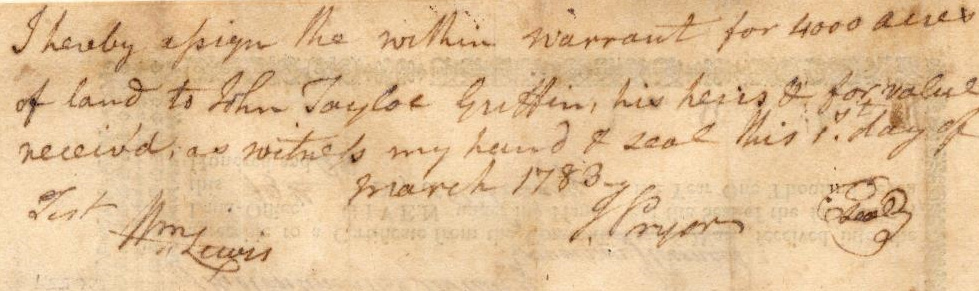
The land warrants and the pension application match up. On both records John Pryor is a Captain Lieutenant. The Warrant number matches up to John Pryor’s land grant: The grant number was 0126.0 while the pension states it was 1760 (I think the “2” was misread as a “7”) on the transcription of his pension (above).The actual land warrants can also be viewed online through the state of Kentucky website. apps.sos.ky.gov/land/military/revwar/Revdetail.asp?Type=w&warrant=0126.0.
There were 4 grants given to John Pryor under this warrant number.
1. Location: Kentucky – on the Cumberland River, near upper corner of C. Carrington’s survey.
Assignee: John Tayloe Griffin
Grant date 9/17/1785.
Received 1000 acres
2. Location: Kentucky – on the Muddy River
Assignee: John Tayloe Griffin
Grate date (surveyed) 7/15/1786
Received 1000 acres
3. Location: On the east side of the Little Miami, later pencil note on document states “land is in Ohio”
Assignee: John Tayloe Griffin, assigned to Robert Morris
Grant date: (surveyed) 4/17/1788
Received 1000 acres
4. Location: Cypress Creek
Assignee: John Tayloe Griffin, Robert Morris assignee
Grant Date: (surveyed) 12/28/1786
Received 1000 acres

There’s no indication that Major John Pryor resided anywhere but Richmond, VA and probably never saw his bounty land in Kentucky. He assigned or sold the land to John Tayloe Griffin who was also from Richmond. I wonder what Griffin’s connections were to the Tayloe family: Major Pryor bought a race horse named Federalist from the estate of John Tayloe per an 1829 racing journal.
With the mention of “Captain” Pryor and a Tayloe connection, it may be time to read another post again and decipher the mystery of Grandma’s Clock [read the post]. And who is the C. Carrington on the first warrant. Could this be Codrington Carrington, son of George Carrington of Cumberland Co., VA [see deeds] and Fayette Co., KY?
And it’s time to dig out the July 1825 edition of the Louisville Morning Post to find out which John Pryor that Elizabeth Pryor Harper found had been killed by Indians.